The Dominican Republic and the hurricane - luck
It is well known, the Caribbean is in the approach path for hurricanes. These form off the west coast of Africa and come as a tropical depression and tropical storm in the direction of the Caribbean. Some move northwest on the Atlantic, stay on the Atlantic and pass the Caribbean islands to the north, others move south across the Caribbean Sea. All in all, the Dominican Republic is extremely fortunate in the long run. While the mostly Catholic population may see this as divine providence, there are scientific explanations for the "luck" of being less afflicted by hurricanes than the neighboring islands.
In the long run, one might think the hurricanes are allergic to the Dominican Republic. A truly blessed land, no animals with deadly poison, nutritious soils, all around just perfect. Not 100%, but compared to neighboring states in the Caribbean, the Dominican Republic comes off very well.
A hurricane in recent years, Hurricane Irma, really scared the Dominican Republic. Not only was Irma the strongest hurricane ever measured on the Atlantic, this impetus was moving towards the island. At the last moment, however, Hurricane Irma turned slightly, reaching the north coast with the intensity of a tropical storm. Haiti and Cuba weren't so lucky, in less than a year two hurricanes struck here (Hurricane Matthew in October 2016, Hurricane Irma in September 2017).
If you believe in statistics, the Dominican Republic is long overdue. Since 1873 32 hurricanes have hit the Dominican Republic, but the last unpleasant experience with a tropical hurricane dates back to 1998 (Hurricane George). Everything that came after that passed the DomRep, albeit sometimes with repercussions.
![]() Luck? Fate? Divine providence? An explanation:
How do these hurricanes form?
Their job is to bring warm water and warm air northwards. This is made by trade winds, which are used pleasantly and positively on the island all year round, for example in Cabarete for surfing. In the so-called hurricane season (June 1st - November 30th) these winds form off the west coast of Africa, they are called tropical waves and they slowly move west. They pass the Cape Verde Islands, mostly heading for the Caribbean and their elixir of life is wind and warm water. If they find these conditions, a tropical wave turns into a tropical depression, then a tropical storm. If the wind speeds within these systems reach speeds of 74 mph / 119 km / h, one speaks of a hurricane.
The intensity is divided into categories from 1–5 on the Saffir-Simpson scale. The warmer the water over which these winds move, the faster the clouds will pick up speed. All storm systems lose power when they move over cold water areas or over land.
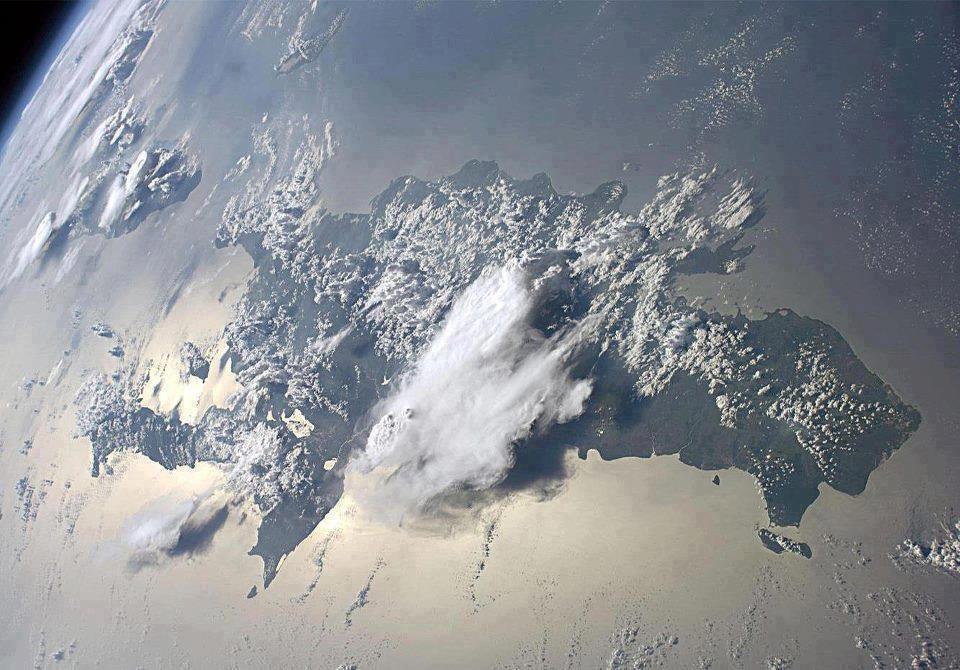
The luck of the Dominican Republic is its positioning in the Caribbean. The island is almost halfway between Cuba and Puerto Rico. The Mona Canal, which connects the waters of the Atlantic to the Caribbean and separates the Dominican Republic from Puerto Rico, helps the island a lot. The prevailing air pressure system and the strong currents push the hurricanes past the Dominican Republic. Another advantage are the coasts of the country, many reefs protect against high waves as well as sections of the beach and stretches of land that are at sea level and only rise slightly, cliffs offer further protection.
The country's topography also helps. With the Pico Duarte, the DR's has
the highest elevation in the Caribbean (3,087 meters), mountain chains like in the north and the central mountains have cooler air, the different air temperatures form a pressure system that repels a hurricane or weakens its intensity. The example of Nagua shows how important the coast is and its offshore reefs. There are no cliffs here, there is no protective reef, the waves hit the coast with full force, so tidal waves have often caused great damage here.
The surfers in Cabarete are always electrified when a hurricane / tropical storm is announced. The day before the first big waves appear, the big time for the surfers. When the hurricane, or tropical storm, passes, storm damage is more likely to occur: uprooted trees, demolished billboards and canopies, flooding after heavy rainfall. Compared to the damage in other Caribbean countries, one can certainly feel happy in the Dominican Republic.
With the conditions described, the DomRep has shown its advantages over other islands, plus the last bit of luck, as with Irma, then you can breathe a sigh of relief. The serious damage that has occurred occurs in dull buildings. Simple huts with a natural roof (palm leaf cover) or metal sheet roof are always an easy match for a storm. The best proof of hurricane luck is the year 2020. It was the most active hurricane year to date since storms and hurricanes were recorded. The Dominican Republic was not directly hit by a single hurricane.